Boat owners in Abu Dhabi, Dubai and the wider Gulf deal with harsh sunshine, salt in the air, fine dust and frequent cleaning. Over time, neglected gelcoat can lose gloss or develop a chalky appearance.
What causes gelcoat oxidation?
Gelcoat is the outer finish on many fibreglass boats. Exposure to ultraviolet radiation, heat and weathering can change the appearance of its surface. The rate of deterioration depends on the gelcoat formulation, colour, age, exposure and maintenance.
Start with better washing
Rinse salt and loose grit before washing. Use clean, soft washing tools and a product compatible with your existing finish or protective coating. Rough wiping across dusty gelcoat may cause fine surface marks, while aggressive cleaners may affect some coatings.
Inspect rather than polish automatically
Look for gradual changes in gloss, stubborn marks and chalking, especially on exposed horizontal sections and areas surrounding fittings. Regular photographs can help you spot deterioration. If gelcoat is already heavily oxidised, a professional may need to correct the surface before protection is applied.
Limit aggressive compounding
Abrasive compounding works partly by removing weathered material. It can restore appearance, but repeated unnecessary cutting reduces the remaining finish. Ask your service company which process it proposes and why.
Consider suitable protective coatings
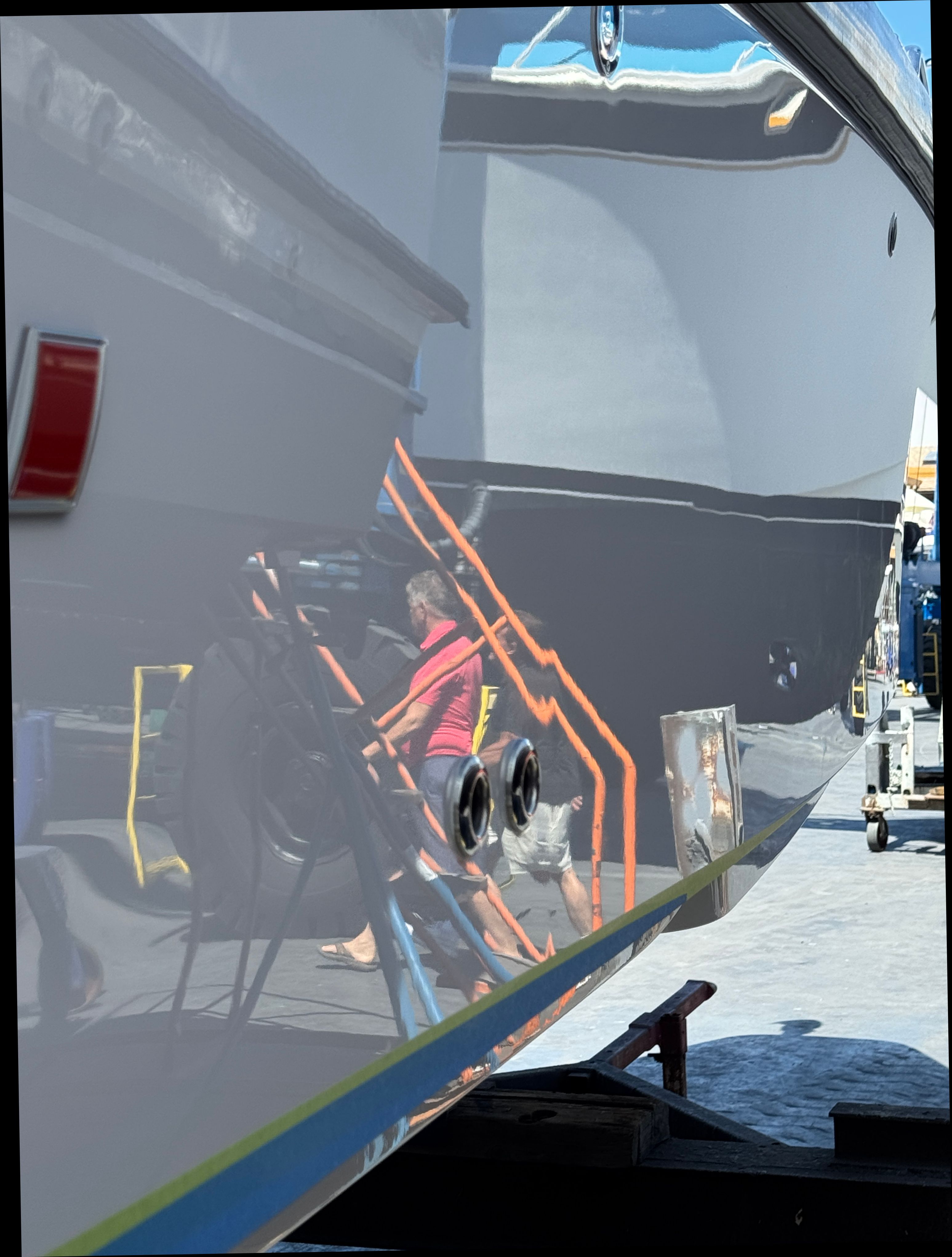
A compatible protective coating may help retain appearance and make dirt and stains easier to remove. Harbor Guard is intended for suitable above-waterline gelcoat and painted surfaces. It is designed to give a high-gloss finish while helping with routine cleaning. Coatings cannot replace repairs to damaged paint or deteriorated gelcoat.
Consult the current Harbor Guard product information and application guidance before use. For coloured gelcoat, speak with a Harbor Guard representative to confirm suitability.
A sensible Gulf maintenance routine
- Rinse loose salt and contamination after exposure.
- Wash with compatible products and clean equipment.
- Remove staining promptly using approved methods.
- Inspect high-exposure areas regularly.
- Review the condition of the protective finish rather than automatically scheduling compounding.
Prevention is generally simpler than restoration. A consistent cleaning and inspection routine helps you get more enjoyment from your boat.
View application videos or contact Harbor Guard for guidance.
